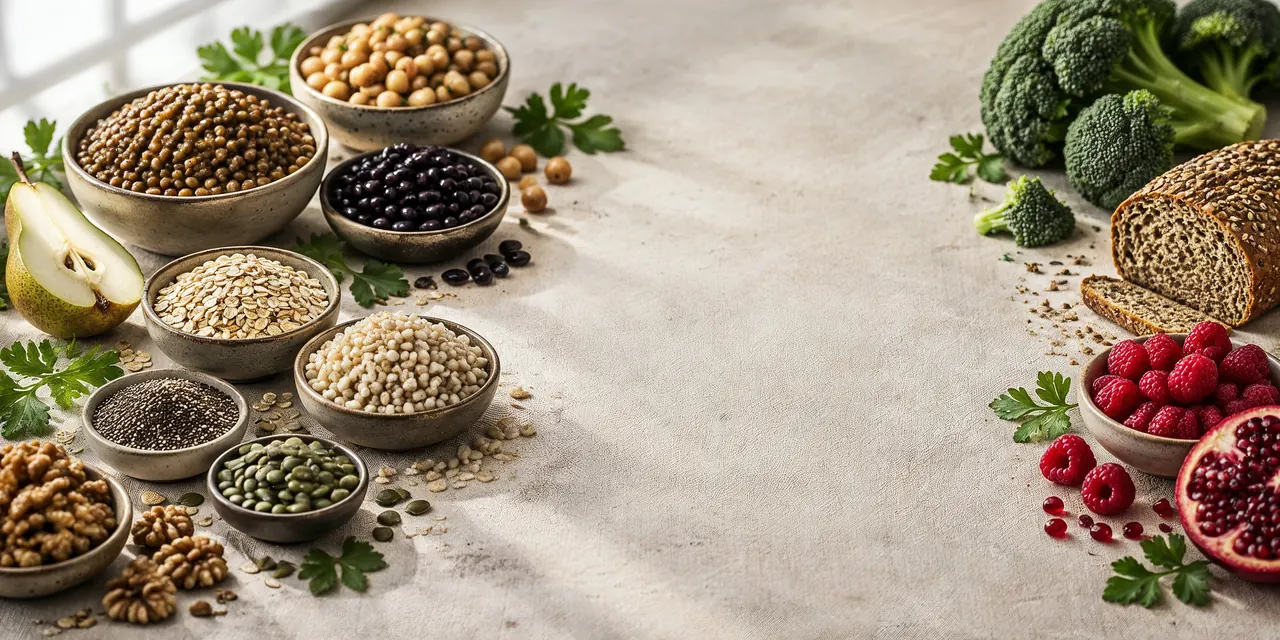
Fiber without the confusion
Am I eating enough fiber,
and why does it hurt when I try?
Fiber matters. But if more beans, whole grains, fruit and vegetables leave you bloated or uncomfortable, simply eating more may not be the whole answer. Start by seeing what you eat now, then find a pace that works for your gut.
Practical plant-based nutrition. No guilt. No miracle claims.

 Plant-based since childhood
The relatable problem
You are trying to eat better. So why does your stomach feel worse?
You do not need more food rules. You need a clearer picture of what is happening: how much fiber you actually eat, which foods carry the kind that ferments fastest, and how quickly the change arrived.
The fiber basics
First, what does fiber actually do?
Dietary fiber is the part of plants the small intestine cannot digest. Some of it dissolves in water and forms a gel that slows digestion and feeds gut bacteria (soluble, in oats, barley, beans and fruit); some of it does not dissolve and adds bulk that moves things along (insoluble, in wheat bran, vegetables and skins). The fermentable kinds are the ones bacteria eat, which is both the long-term benefit and the short-term gas. Content varies by food, by portion and by how it is cooked, and tolerance varies by person, which is why one target does not fit everyone.
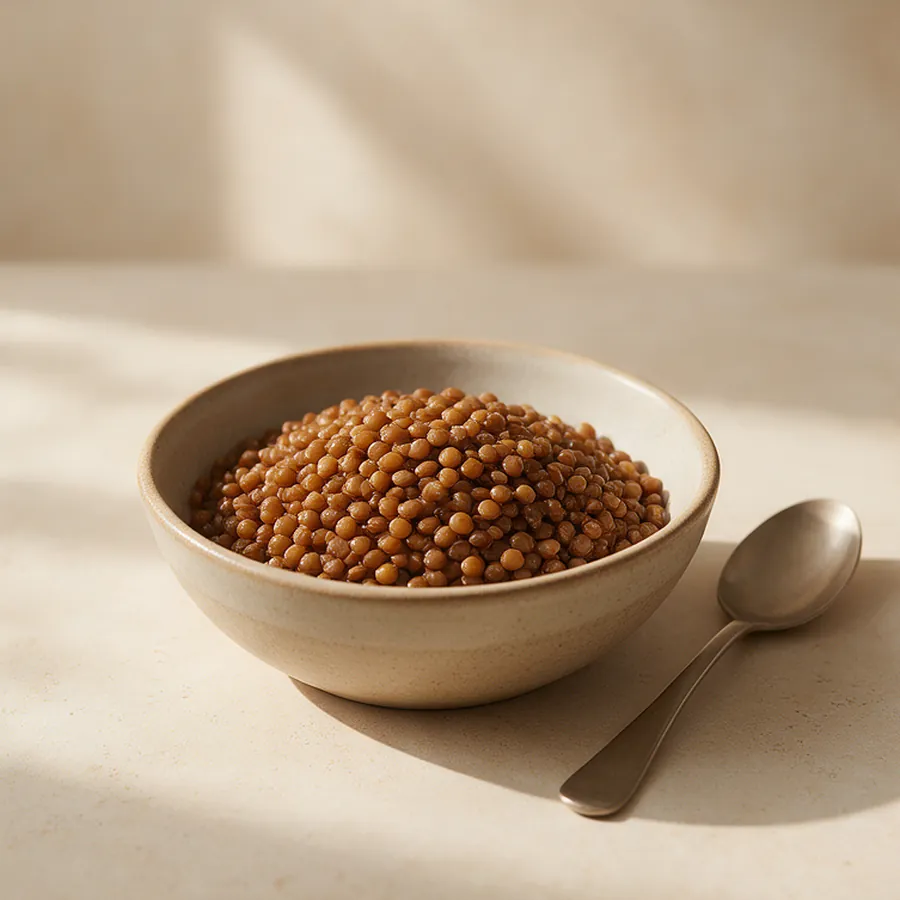
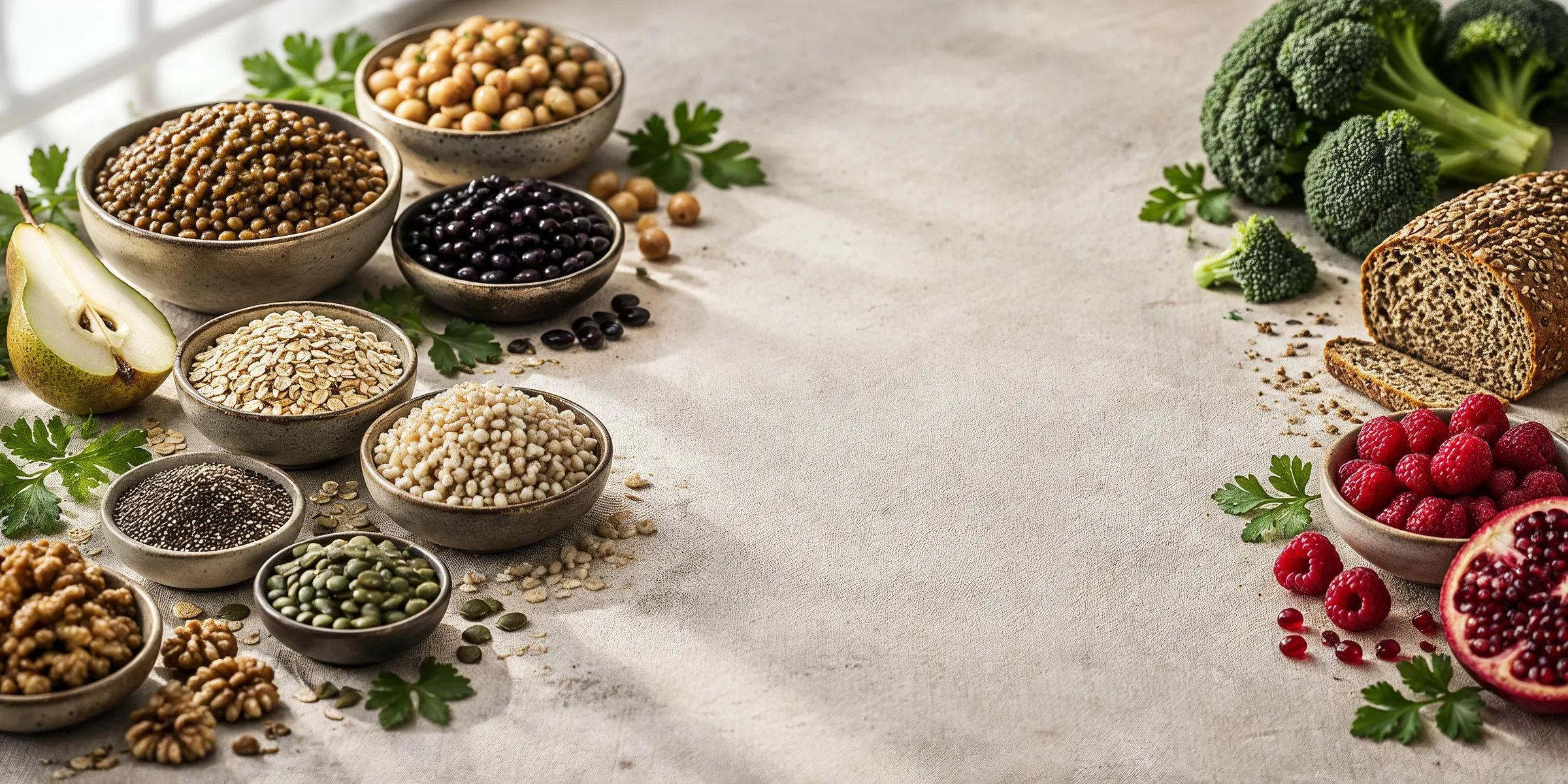
Legumes
Lentils, chickpeas, beans and peas: the densest sources, 7 to 16 g a cup, and the ones most likely to cause gas at first because of their fermentable oligosaccharides.
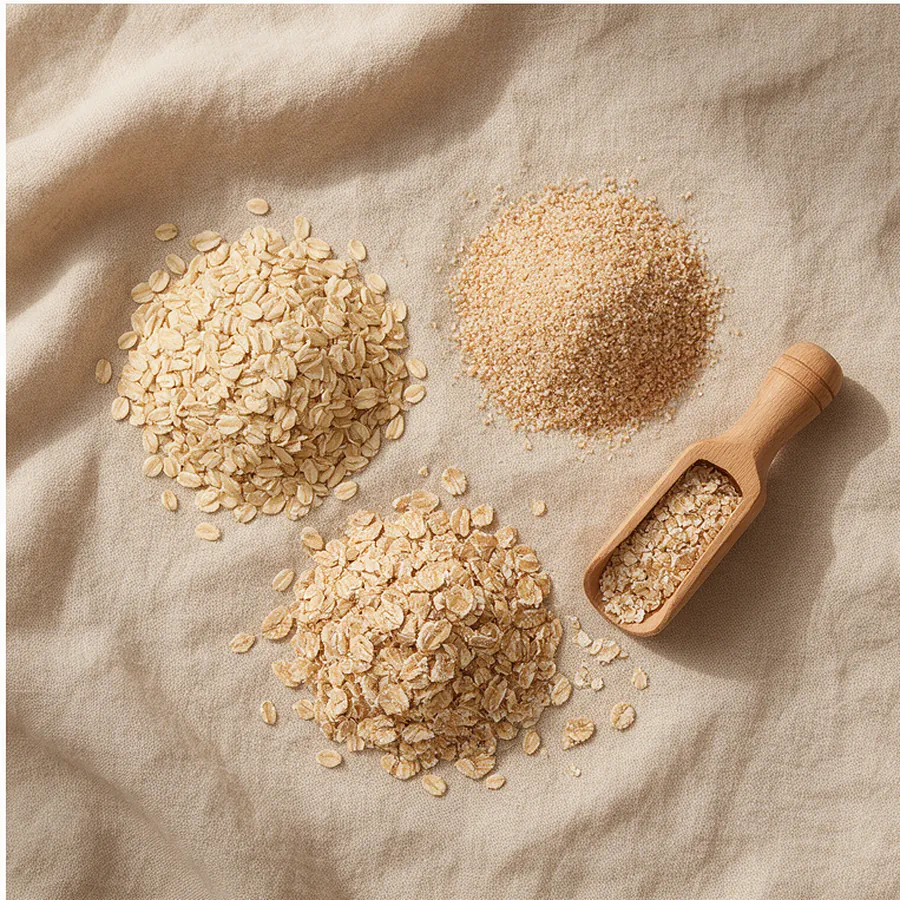
Whole grains
Oats, barley, rye, bulgur, brown rice and wholewheat pasta. Oats and barley carry soluble beta-glucan; wheat bran is mostly insoluble.
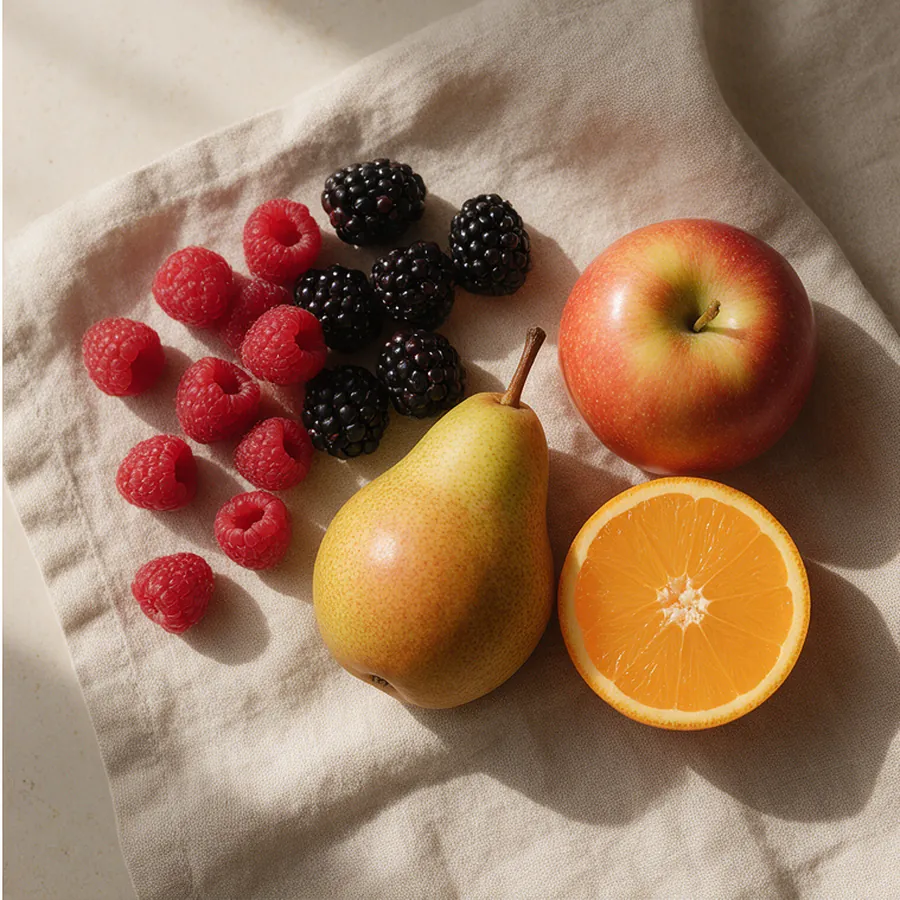
Fruit
Raspberries and pears at the top, whole fruit over juice every time; the skin and the pith are where most of it is.
The central tool
How much fiber are you actually eating?
Add the foods from a typical day, set the servings, and see the estimate against the EFSA adequate intake of 25 g a day for adults, the US guideline of about 28 g at 2,000 kcal and the UK figure of 30 g. Most adults sit near 17 g, according to the Academy of Nutrition and Dietetics position paper; seeing the number is the first step and the only one this tool takes.
Values are dietary fiber per serving from the USDA FoodData Central, SR Legacy and Foundation Foods, dietary fiber per serving, rounded to the nearest 0.5 g. Canned and packaged foods vary by brand; the label on the packet wins.
Your day
Nothing added yet. Search above and add the foods you ate on a typical day, then adjust the servings.
Your result is an estimate based on the foods and portions you entered. It is a starting point for understanding your intake, not a diagnosis or a personalized medical recommendation. Nothing you enter leaves your browser.
The food finder
Find fiber in the foods you already enjoy
Filter by category, meal and practicality (budget, quick, canned, frozen, pantry), and compare up to three foods side by side per 100 g. The library is not a ranking; a food you will eat at 4 g beats one you will not at 10.
Beans and lentilsLentils, cooked
15.5 gper 1 cupNo soaking; red lentils cook in 15 minutes, brown in 25. Cook a pot on Sunday for three lunches.
One of the densest sources; a half cup is a sensible first portion if legumes are new to you.
 Beans and lentils
Chickpeas, canned, drained
7.5 gper half a canRinse well; rinsing removes some of the oligosaccharides that cause gas, and the salt.
Canned values vary by brand; the label on the tin wins.
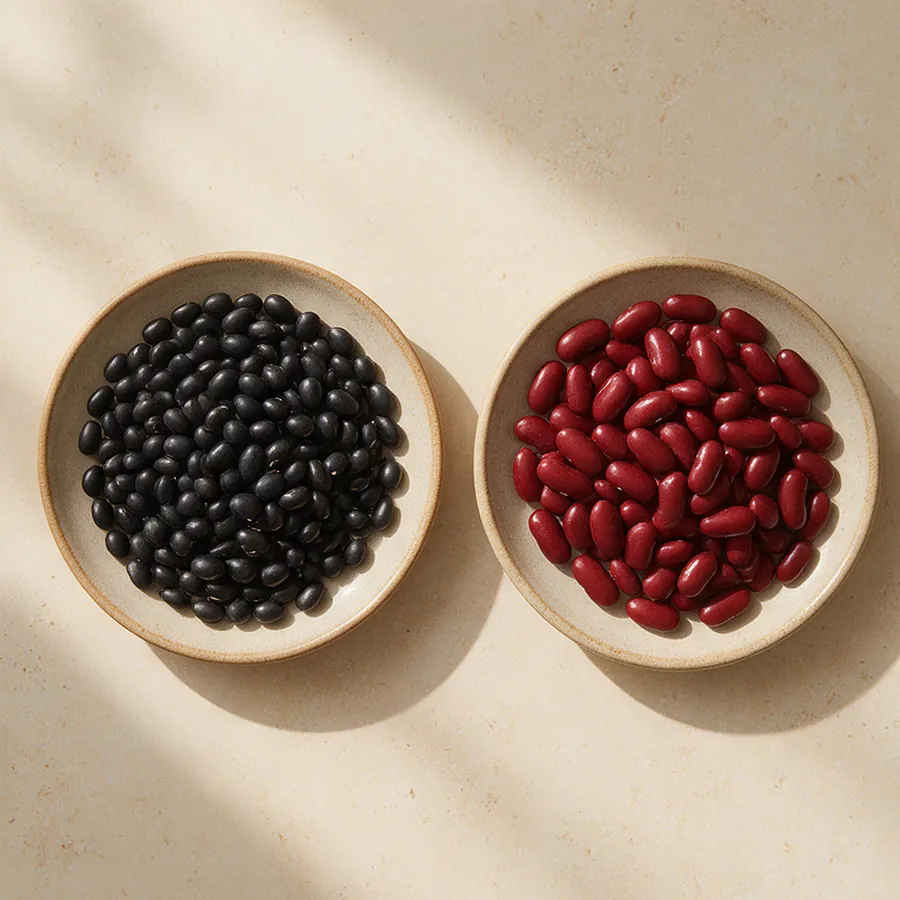 Beans and lentils
Black beans, cooked
15 gper 1 cupCanned works; drain and rinse. Half a can is about 7 g.
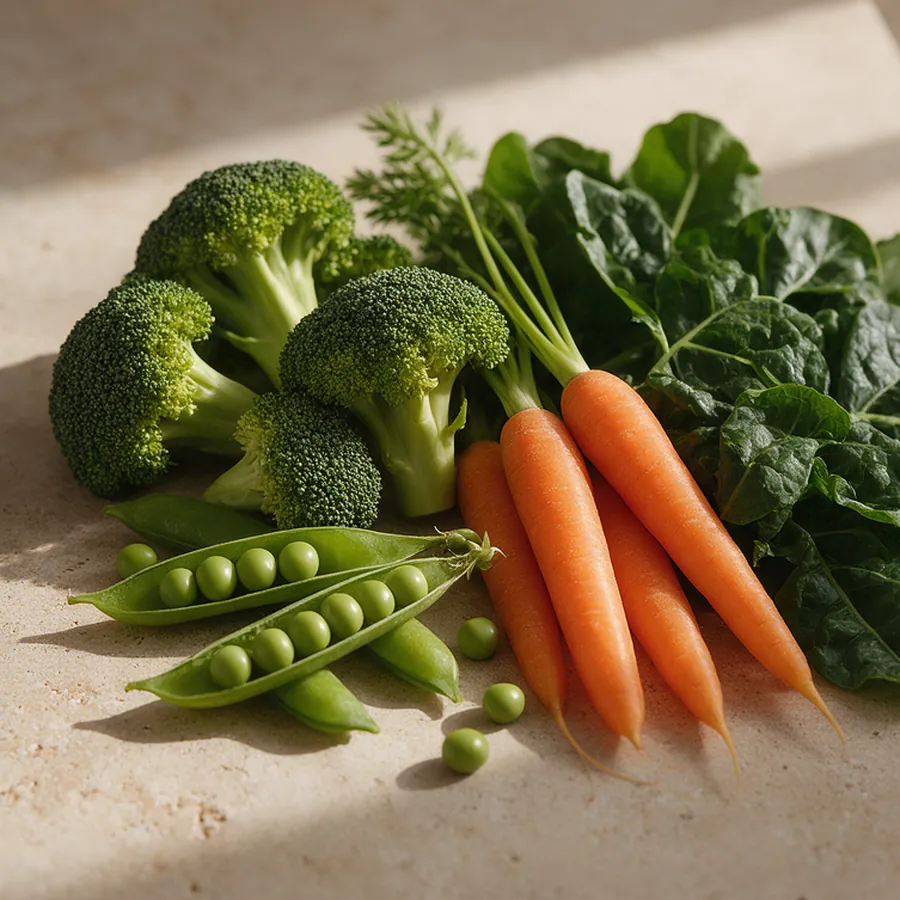 Vegetables
Green peas, cooked
9 gper 1 cupThe cheapest 9 g in the shop; frozen is as good as fresh.
Grains and breadRolled oats, dry
4 gper 40 g, about half a cupPorridge or overnight oats; add seeds and fruit to double the bowl's total.
 Grains and bread
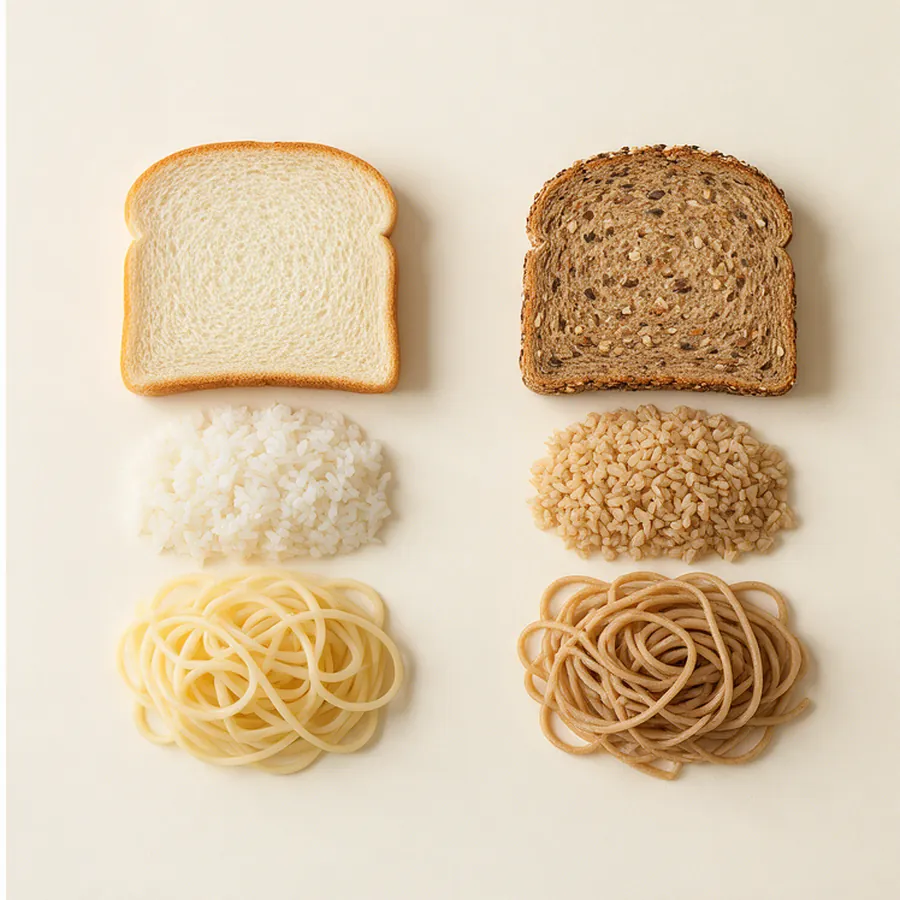
Wholewheat pasta, cooked
6.5 gper 1 cupNearly three times the fiber of white pasta for the same plate.
 Grains and bread
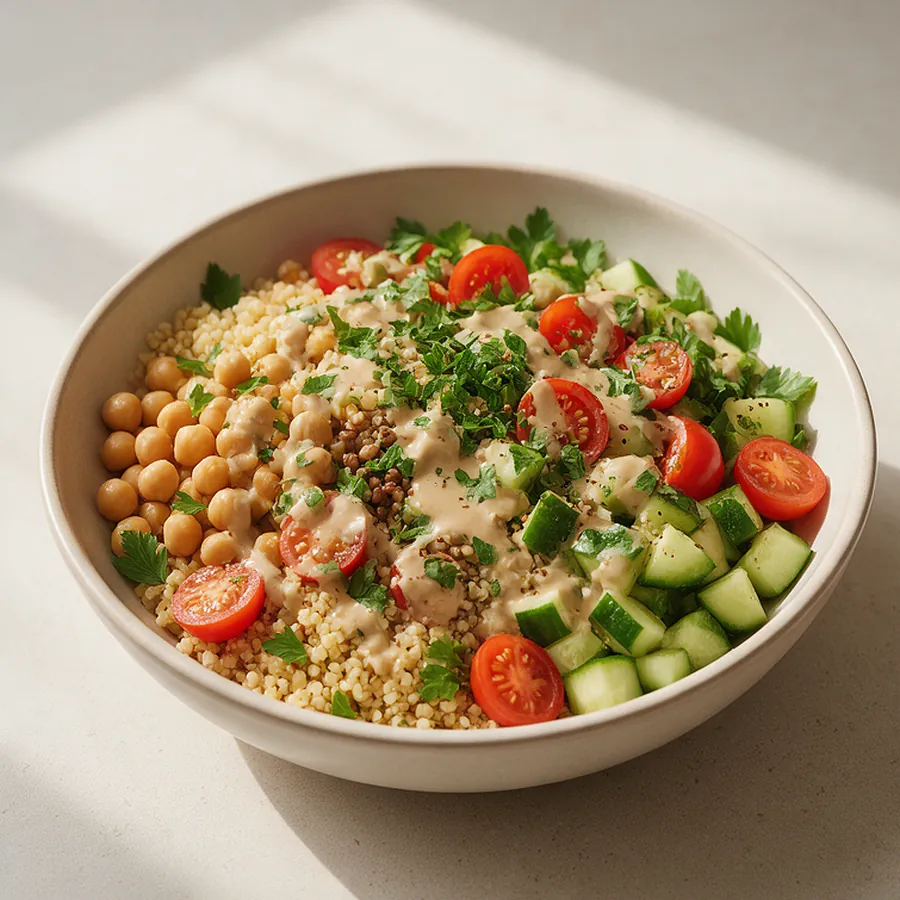
Bulgur wheat, cooked
8 gper 1 cupPour boiling water over it, cover, ten minutes. The base of tabbouleh.
FruitRaspberries
8 gper 1 cupThe highest-fiber common fruit; frozen is cheaper and as good on porridge.
FruitPear, with skin
5.5 gper 1 mediumMost of the fiber is in and just under the skin.
Pears are high in sorbitol, which some people find gassy.
VegetablesBroccoli, cooked
5 gper 1 cupSteam five minutes; the stalk, peeled and sliced, is as good as the florets.
A fermentable vegetable; some people notice more gas from larger portions.
 Nuts and seeds
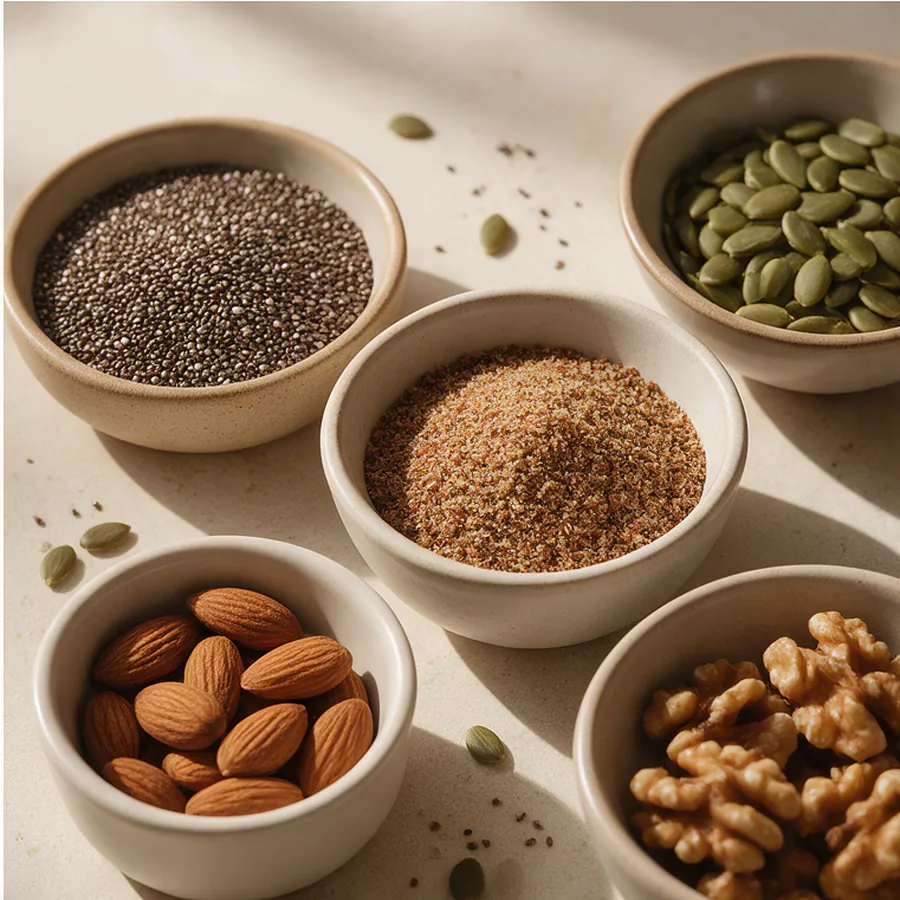
Chia seeds
9.5 gper 2 tablespoonsSoak in plant milk for a pudding, or stir into porridge; always with liquid.
A lot of fiber in a small spoon; one tablespoon is a sensible start.
Nuts and seedsAlmonds
3.5 gper 30 g, about 23 nutsraw, with skin
No food matches that combination. Loosen one filter.
Side by side
Serving sizes differ by food, so the fourth column shows fiber per 100 g as a like-for-like figure. The higher number is not automatically the better choice for you; tolerance, cost and whether you will actually eat it matter as much.
| Food | Serving | Fiber per serving | Per 100 g | Form | Note |
|---|
Source: USDA FoodData Central, SR Legacy and Foundation Foods, dietary fiber per serving, rounded to the nearest 0.5 g.
Why increasing fiber can cause discomfort
Eating more fiber can feel worse before it feels better. Here is why.
Six things that may contribute, in roughly the order they turn up. The Academy of Nutrition and Dietetics position paper notes that increasing fiber quickly causes gas and bloating and advises gradual increases with fluids, and that some fibers, such as inulin, produce more gas than others. Not every symptom is fiber, and persistent or severe symptoms are not adjustment.
Going from 15 g to 30 g in a week is the most common cause. The gut bacteria that ferment fiber multiply to meet supply, and that takes weeks, not days; the gas in between is the lag.
Beans, lentils, onions, wheat and some fruit carry fermentable carbohydrates (oligosaccharides, fructans, sorbitol) that produce more gas than the fiber in oats, berries or carrots. Two foods with the same fiber can feel very different.
A cup of chickpeas is not the same meal as half a cup, rinsed, in a salad. Soaking, rinsing canned beans, cooking longer and starting smaller all change how a food lands.
Fiber holds water; if intake of fluid does not rise with it, the result can be harder stools rather than easier ones, which is the opposite of what people were promised.
A new diet usually changes meal size, timing, fat, sweeteners and coffee at the same time. Not every symptom that arrives with the beans is caused by the beans.
Irritable bowel syndrome, coeliac disease, inflammatory bowel disease and some medications change what is comfortable. If symptoms are persistent, severe or new, that is a clinician's question, not a fiber question.
The gradual approach
You do not have to overhaul your entire diet overnight
Run the checker on a typical day before changing anything. Most people are nearer 15 g than 30, and the first job is to see which meals carry none.
Add a single fiber-carrying food to one meal, in a small portion, and keep it there for a week. Half a cup of lentils at lunch, not a cup of beans at every meal.
When one food is comfortable, grow the portion before adding another. Changing several foods at once is how people learn nothing about which one bothered them.
An extra glass with each new fiber food. Not a rule for everyone, but the cheapest thing to try first when stools get harder instead of softer.
A line in a notebook on the days something feels different is enough. A gram-by-gram diary is not required and for some people makes eating worse.
Discomfort is information, not a test of character. Drop the portion back to where it was comfortable and hold there longer. If it does not settle, see someone.
General education, not a treatment plan. Anyone with a diagnosed gut condition or a clinician-directed diet needs individual guidance before changing fiber. The gradual guide has the week-by-week version.
Plant-based fiber meals
Simple meals. Familiar ingredients. More informed choices.
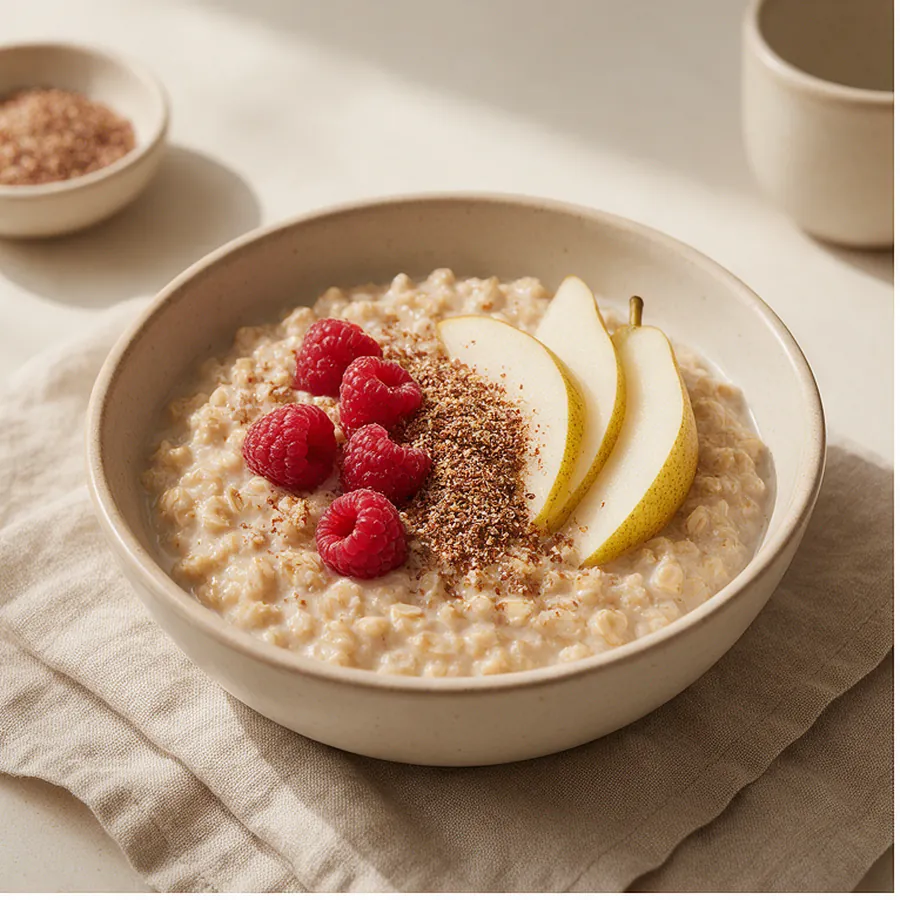
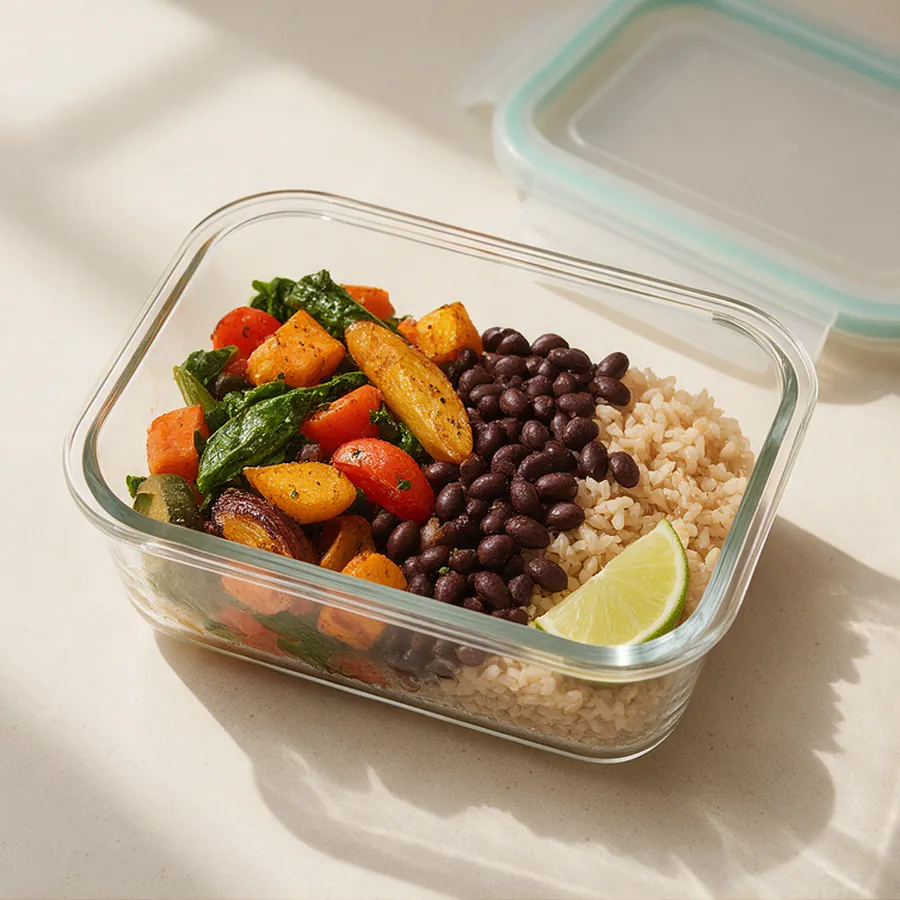
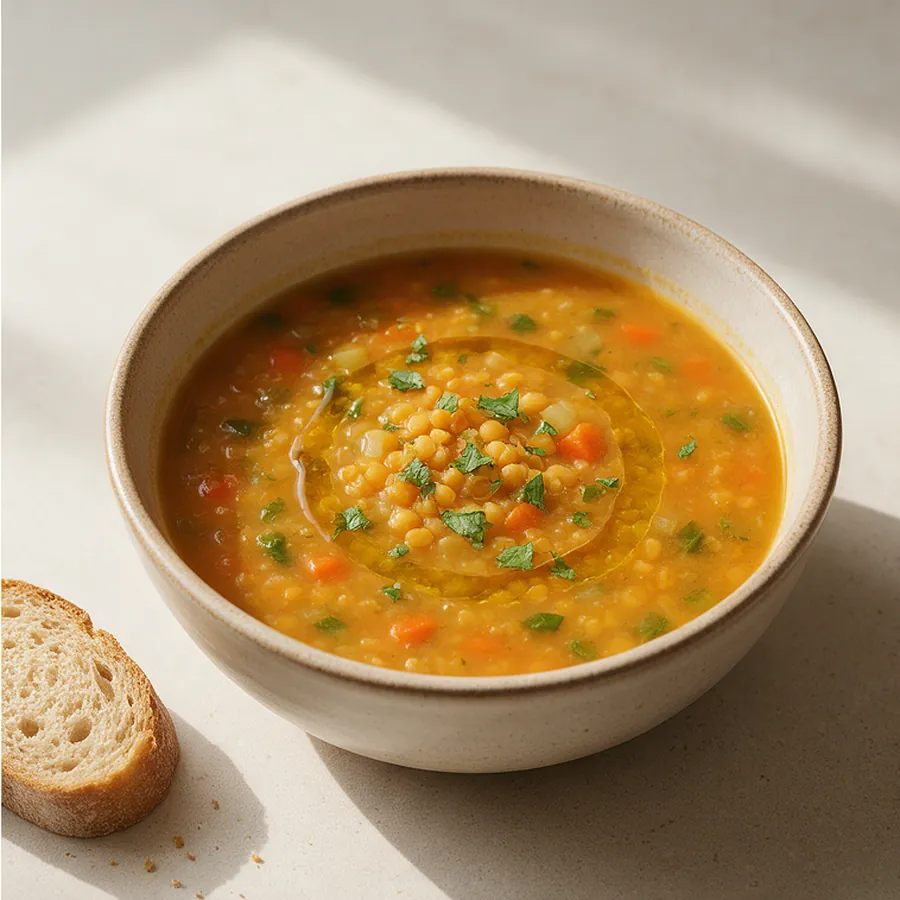
Every recipe carries gram quantities, servings, time and the fiber per serving from the USDA database, with substitutions and the ingredients that may not suit everyone. None is described as gut-healing or bloat-proof, because no food is. The foods and recipes section.



Fiber without overwhelm
You do not need a perfect food diary
Look at a typical day. Notice which foods and portions turn up most. Find one or two realistic places for variety. Use the checker once as an estimate, not daily as a score, and look again after a month of small changes. Tracking every gram forever is not required, and for some people it makes eating worse, not better.
For the people who find a page useful, there is a one-day observation sheet to print: foods, rough portions, what changed, how it felt, and the questions to bring to a professional if it keeps happening.
The fiber knowledge hub
Clear answers to the questions you actually have
High Fiber Vegan Foods Chart: 50 Foods, Grams per Serving
A high fiber vegan foods chart of 50 plant foods with USDA fiber per serving and per 100 g: legumes, grains, fruit, vegetables and seeds, plus three recipes.
9 min readHow Much Fiber Do Adults Need? The Numbers and the Foods
How much fiber adults need by EFSA, the US guidelines and the NHS, what most people eat, soluble against insoluble and fermentable, and where it is on a plate.
8 min readHow to Increase Fiber Gradually: A Six-Week Plan That Holds
How to increase fiber gradually: a six-week plan from an average 17 g to the high twenties, one food and one meal at a time, gentler sources first.
7 min readSimple High Fiber Vegan Breakfasts: Five Bowls, 10 to 16 g
Five simple high fiber vegan breakfasts with gram quantities, time and USDA fiber per serving: oats with pear and flax, overnight oats, chia pudding and more.
7 min readWhen discomfort needs more than a food adjustment
Not every digestive symptom is a fiber problem
Persistent, worsening, severe or unexplained symptoms deserve assessment by a doctor, and some need it promptly. This site does not triage anyone and the list is not exhaustive; it is here so that nobody reads a page about beans and decides to wait.
See a doctor promptly, or urgently if sudden and severe, for:
- severe or persistent abdominal pain
- blood in the stool, or black or tarry stools
- persistent vomiting
- significant unexplained weight loss
- a change in bowel habit that lasts more than a few weeks
- symptoms that wake you at night, fever, or a family history of bowel disease
Anyone with a diagnosed digestive condition, significant dietary restrictions or ongoing symptoms should discuss fiber changes with a clinician or registered dietitian rather than with a website.





Who writes this
Better habits begin with understanding, not perfection
Plant-based advice sounds simple in theory: eat the beans, eat the oats. Real people have different routines, budgets, tolerances and histories, and Barbara has spent years at a kitchen table in the Nordics, in online sessions, watching the same advice land differently in every one of them. She writes every page here herself, from a lifetime of eating this way and a Nordic pantry of oats, rye, lentils and berries, and she is a guide, not a clinician; the pages say so wherever it matters.
Start with one clearer picture of your plate
Barbara's letters: one food, one portion, one honest answer, every Sunday
This is general information about food and training, not medical advice. If you have a diagnosed condition or take medication, talk to your doctor before changing your diet or exercise.
Evidence packs: fiber-30g-v1 and oat-beta-glucan-v1. Food values: USDA FoodData Central. Published by Barbara of North.