The fiber food finder
Find fiber in the foods you already enjoy
Fifty plant foods with verified fiber per serving, filterable by category, meal and practicality. Tick up to three to compare them per 100 g. The library is deliberately not a ranking: tolerance is individual, no category is gentle for every gut, and a food you will actually eat beats a denser one you will not.
 Beans and lentils
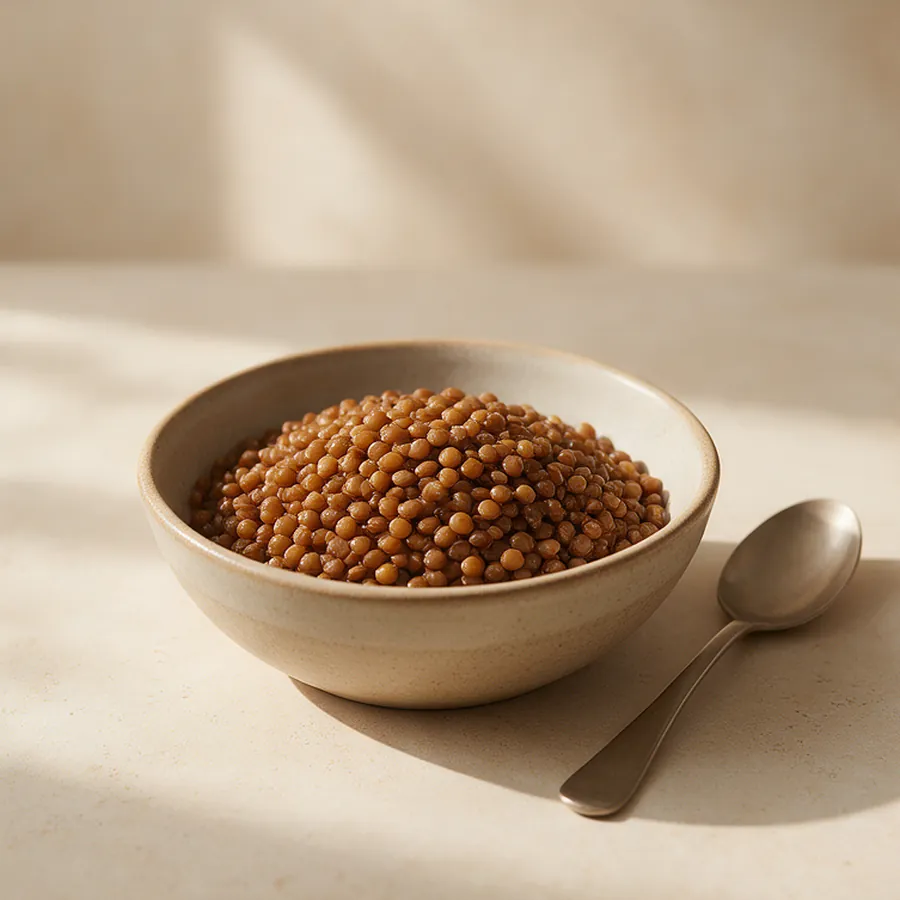
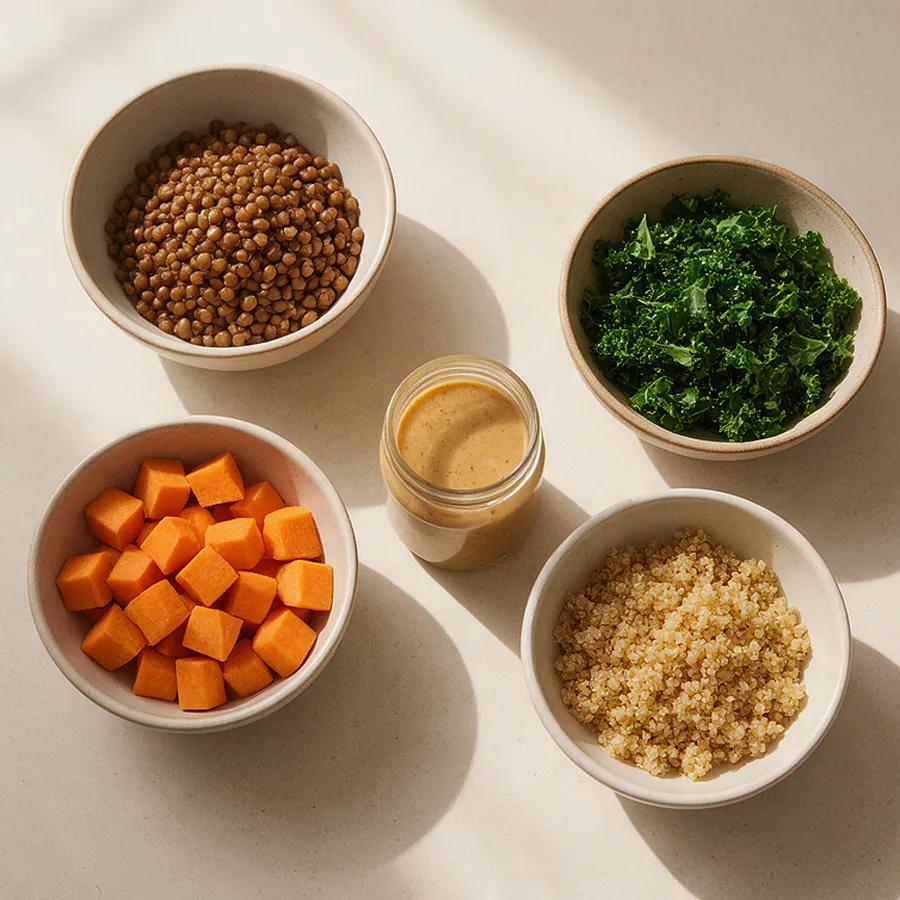
Lentils, cooked
15.5 gper 1 cupNo soaking; red lentils cook in 15 minutes, brown in 25. Cook a pot on Sunday for three lunches.
One of the densest sources; a half cup is a sensible first portion if legumes are new to you.
 Beans and lentils
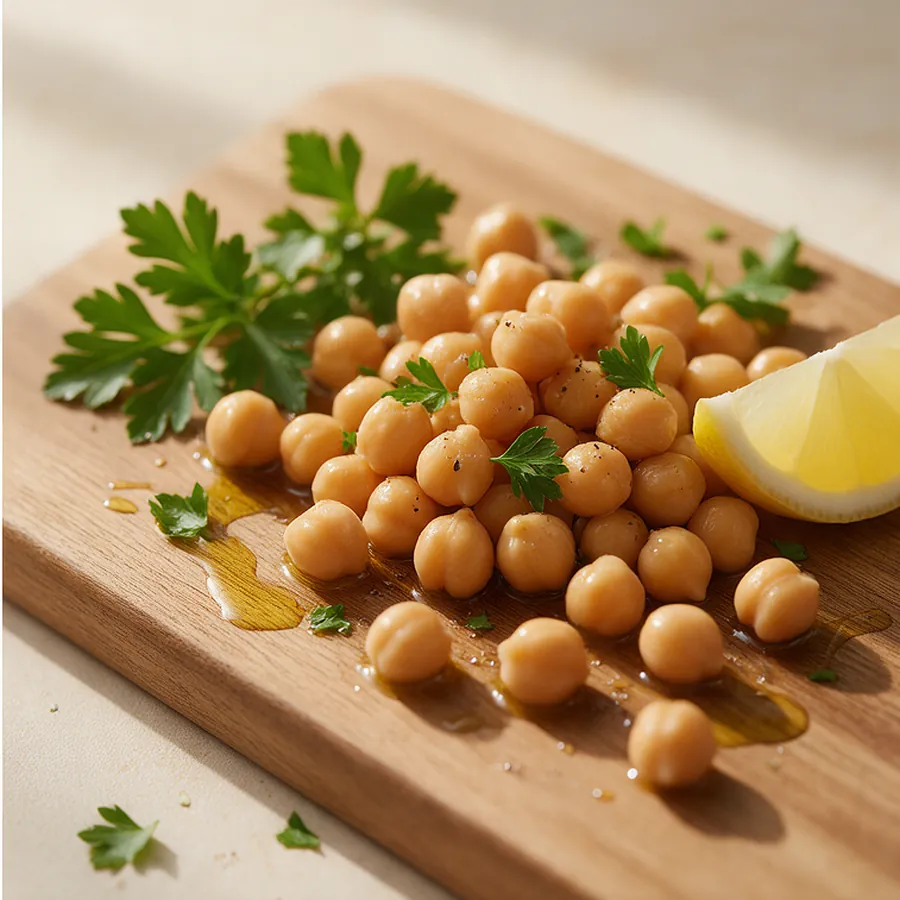
Chickpeas, cooked from dried
12.5 gper 1 cupSoak overnight, simmer 60 to 90 minutes, or use a pressure cooker.
 Beans and lentils
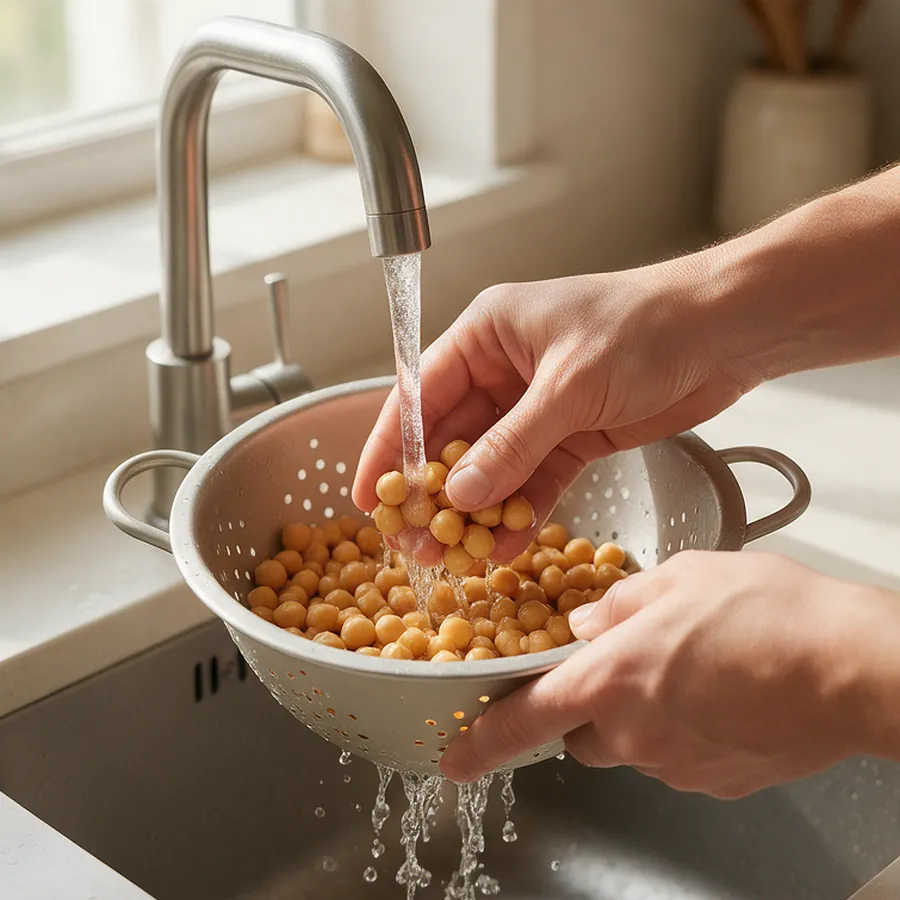
Chickpeas, canned, drained
7.5 gper half a canRinse well; rinsing removes some of the oligosaccharides that cause gas, and the salt.
Canned values vary by brand; the label on the tin wins.
 Beans and lentils
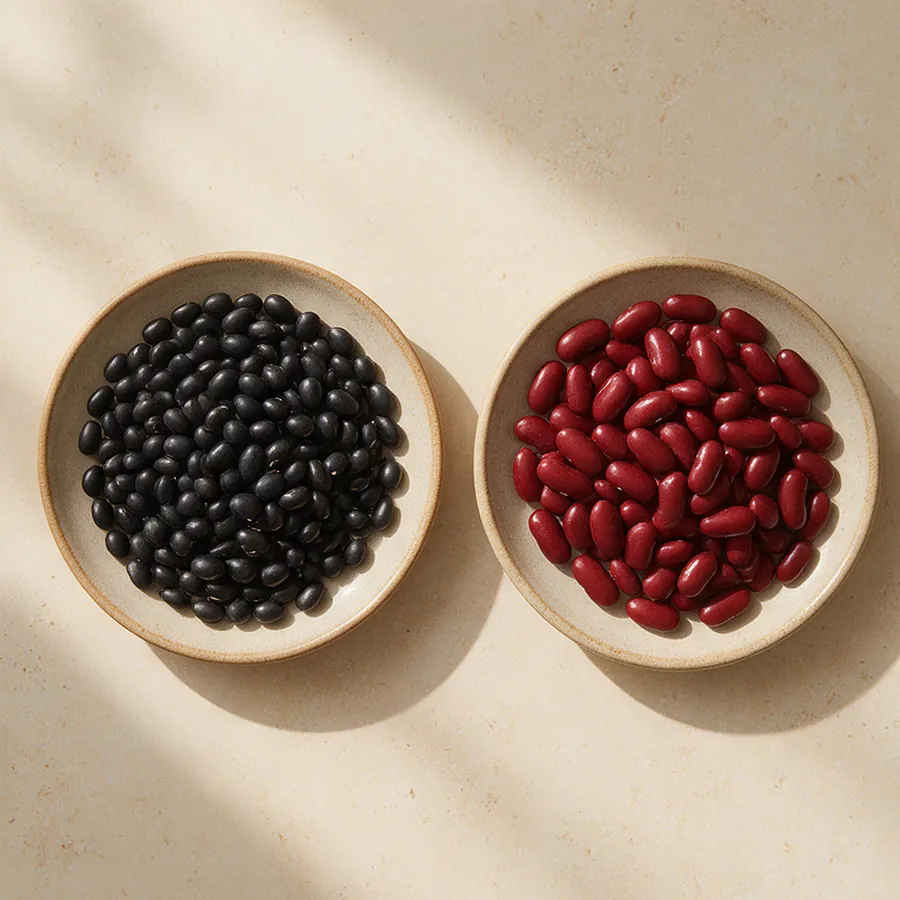
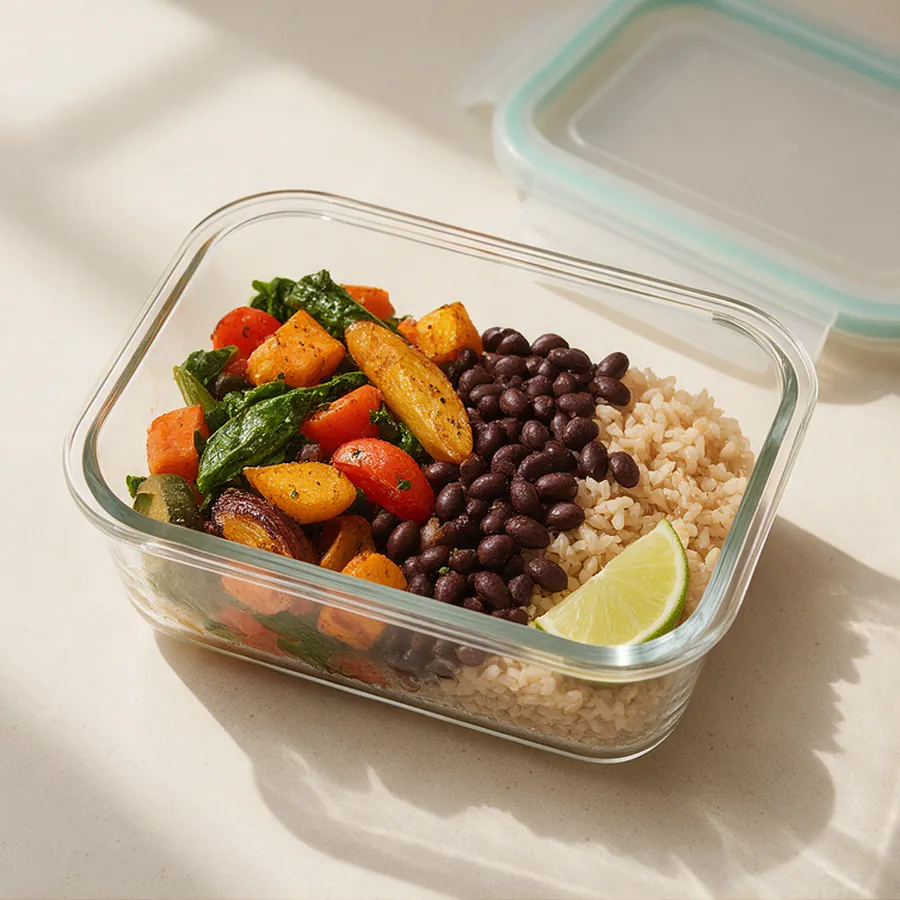
Black beans, cooked
15 gper 1 cupCanned works; drain and rinse. Half a can is about 7 g.
Beans and lentilsKidney beans, cooked
11.5 gper 1 cupDried kidney beans must be boiled hard for 10 minutes before simmering; canned are already safe.
 Beans and lentils
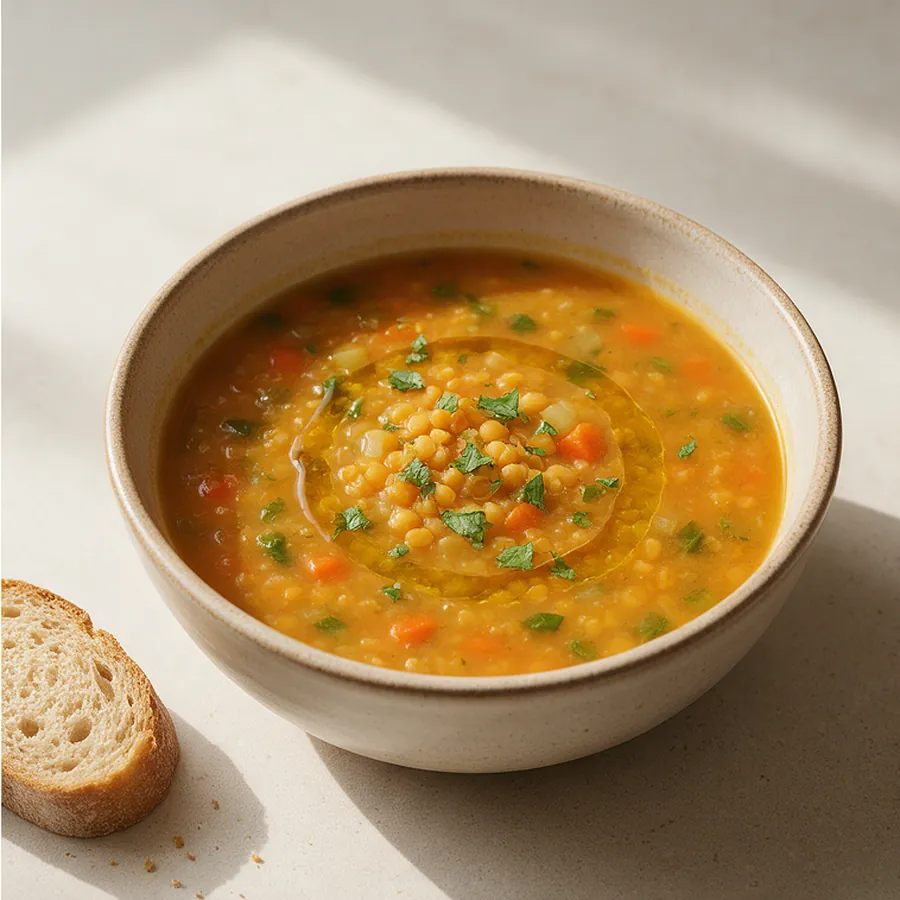
Split peas, cooked
16 gper 1 cupThe base of a soup that costs almost nothing; no soaking needed.
 Beans and lentils
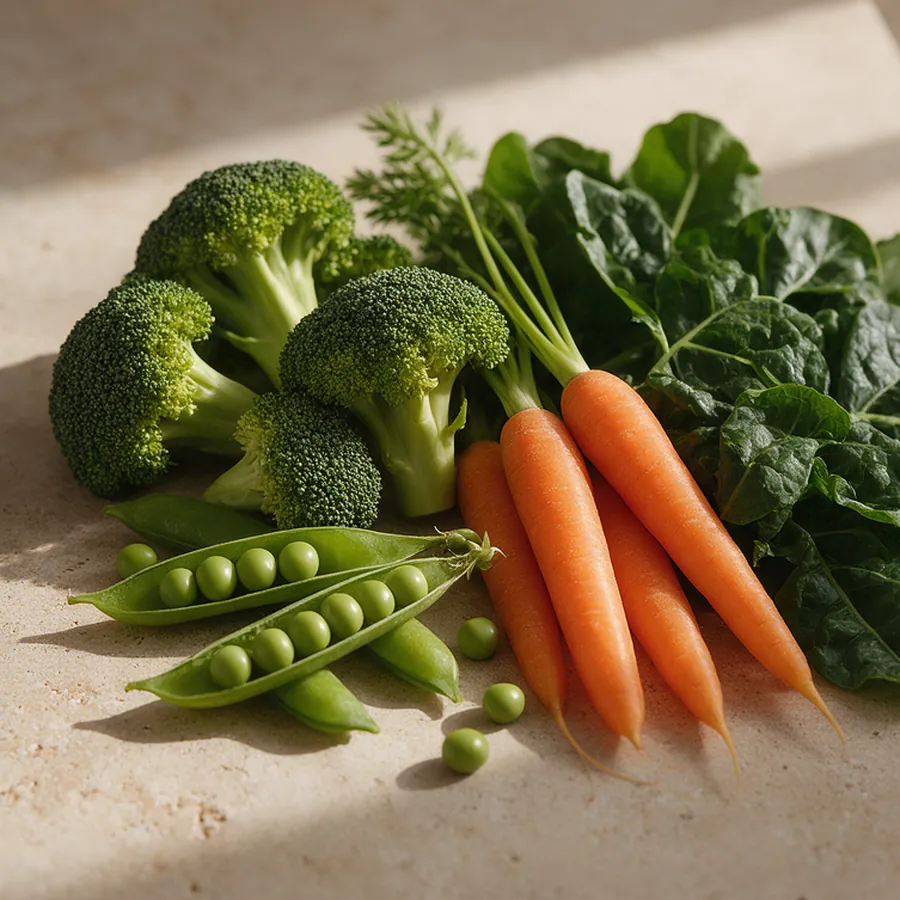
Edamame, cooked
8 gper 1 cup, shelledFive minutes from the freezer; a snack with salt or a protein anchor in a bowl.
VegetablesGreen peas, cooked
9 gper 1 cupThe cheapest 9 g in the shop; frozen is as good as fresh.
Beans and lentilsBaked beans in tomato sauce
7.5 gper half a canOn wholegrain toast, a 12 g breakfast; check the sugar on the label.
Brands vary; use the label value if it differs.
Beans and lentilsHummus
2 gper 2 tablespoonsWith carrot sticks or in a wrap.
 Grains and bread
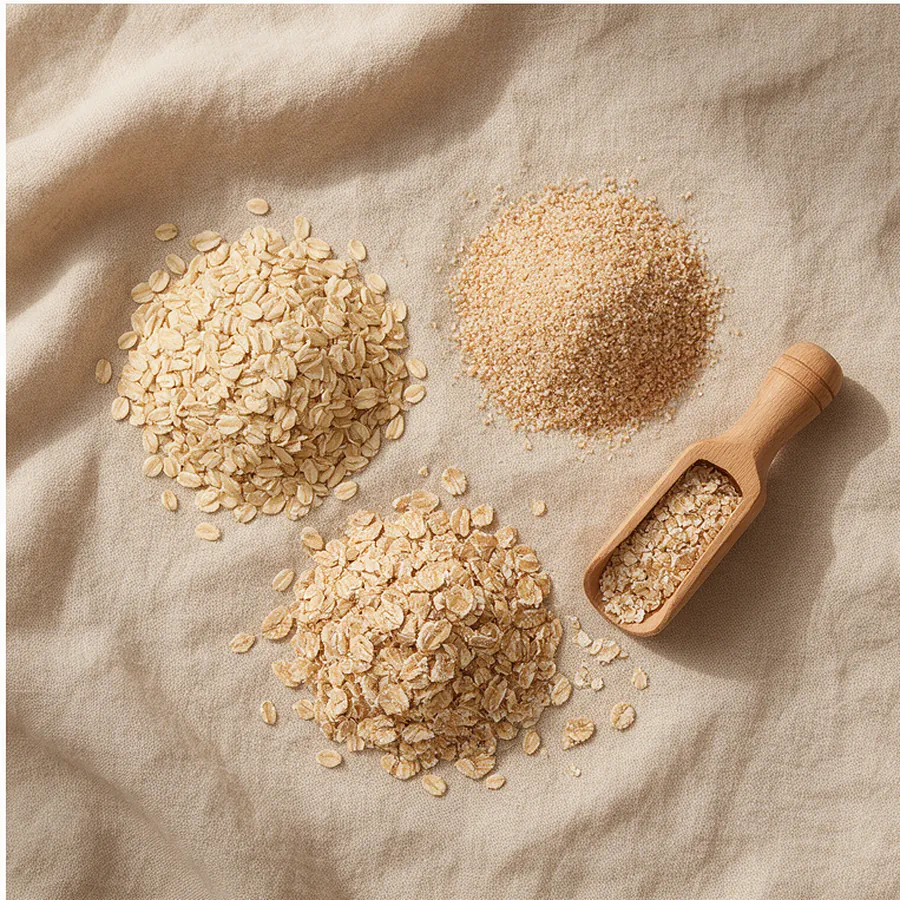
Rolled oats, dry
4 gper 40 g, about half a cupPorridge or overnight oats; add seeds and fruit to double the bowl's total.
Grains and breadOat bran, dry
3.5 gper quarter cupStir into porridge or yogurt; denser in fiber than rolled oats by weight.
 Grains and bread
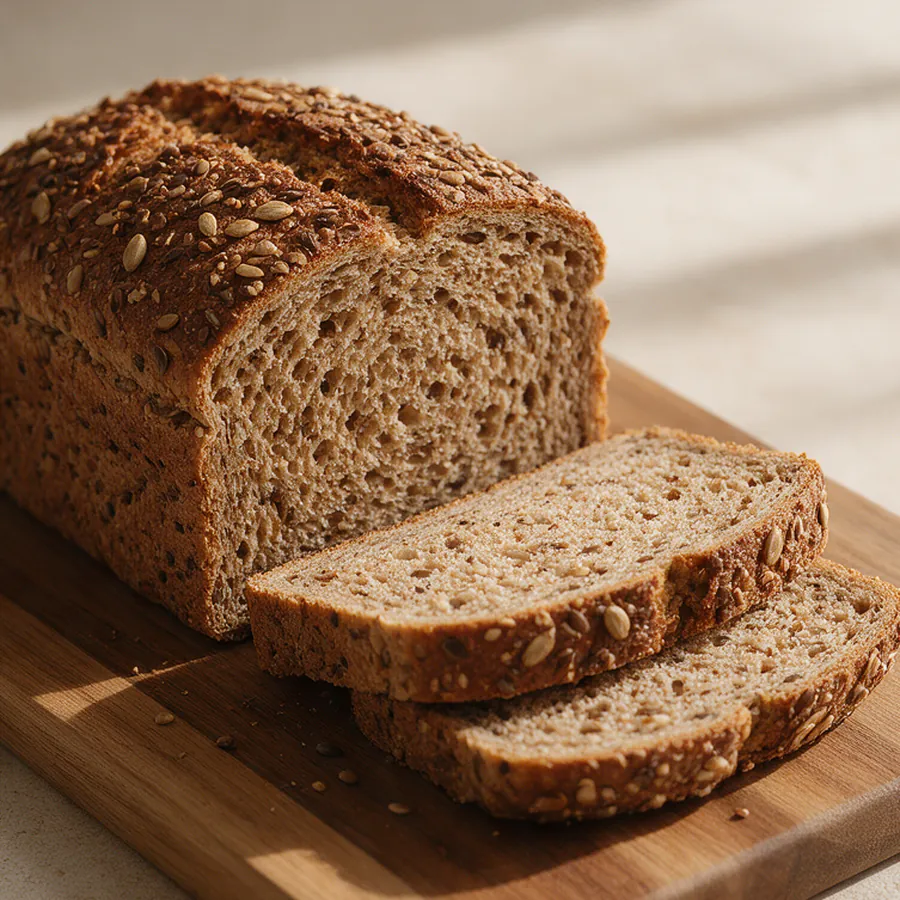
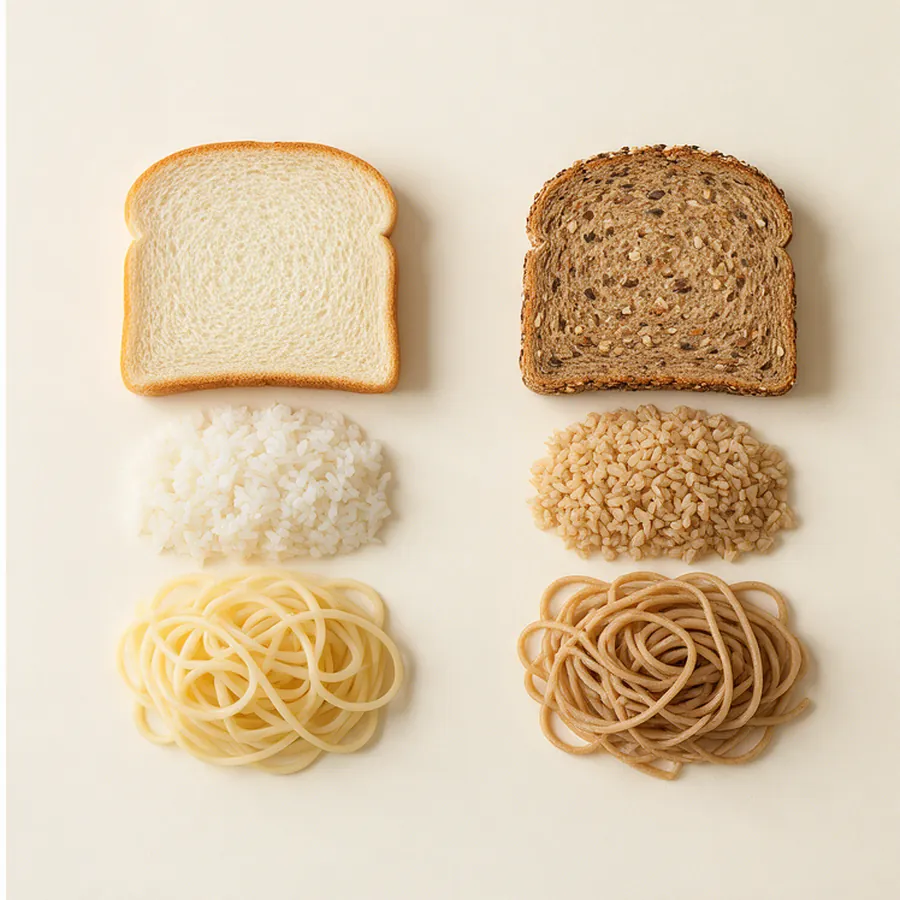
Wholegrain bread
2 gper 1 sliceSeeded loaves run higher; read the label per slice.
Values vary widely by loaf; 2 g is a typical wholemeal slice.
Grains and breadRye bread
2 gper 1 sliceDense Nordic rye can reach 4 g a slice; the label knows.
 Grains and bread
White bread
1 gper 1 sliceIncluded for comparison; swapping two slices to wholegrain adds about 2 g a day.
 Grains and bread
Brown rice, cooked
3.5 gper 1 cupCook a batch; it freezes in portions.
Grains and breadWhite rice, cooked
0.5 gper 1 cupIncluded for comparison; the grain carries little, the beans on top carry a lot.
 Grains and bread
Quinoa, cooked
5 gper 1 cupRinse before cooking to remove the bitter coating; 15 minutes.
Grains and breadWholewheat pasta, cooked
6.5 gper 1 cupNearly three times the fiber of white pasta for the same plate.
Grains and breadWhite pasta, cooked
2.5 gper 1 cupIncluded for comparison.
Grains and breadPearl barley, cooked
6 gper 1 cupIn soups and stews; chewy, filling, cheap.
 Grains and bread
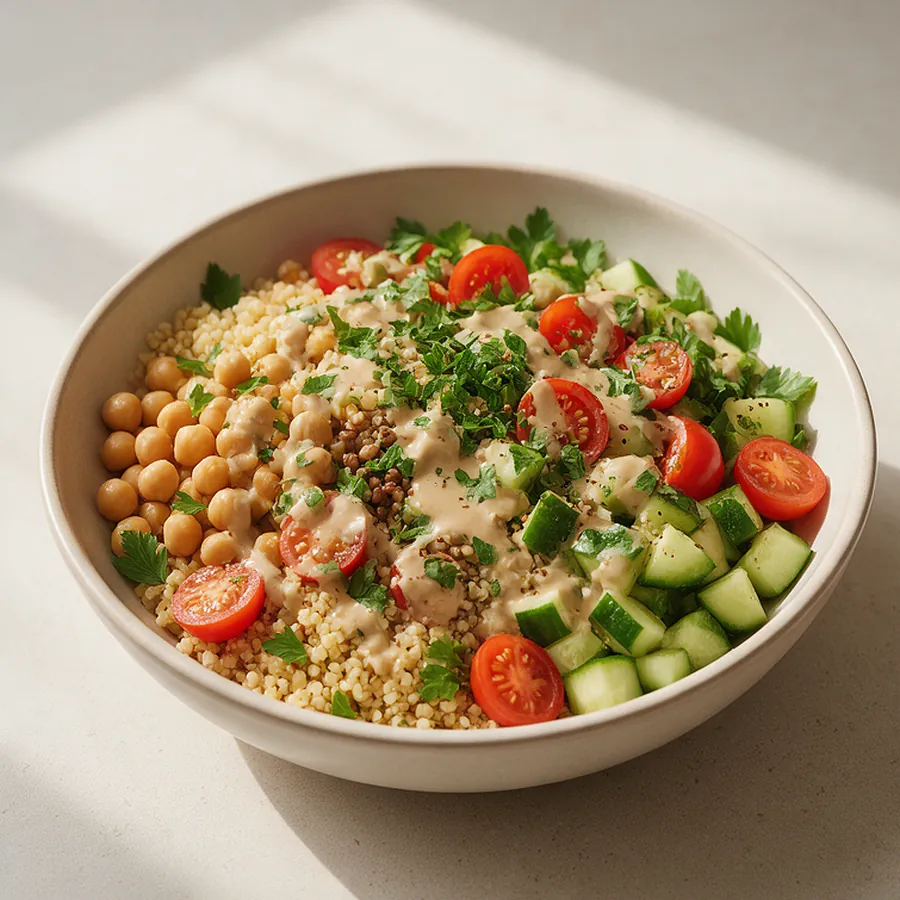
Bulgur wheat, cooked
8 gper 1 cupPour boiling water over it, cover, ten minutes. The base of tabbouleh.
Grains and breadPopcorn, air-popped
3.5 gper 3 cupsA wholegrain snack; the fiber is in the hull, which is also what gets stuck in teeth.
Grains and breadWholewheat cereal biscuits
6 gper 2 biscuitsPlain shredded wholewheat; check the label for added sugar on flavored versions.
Brands vary.
 Fruit
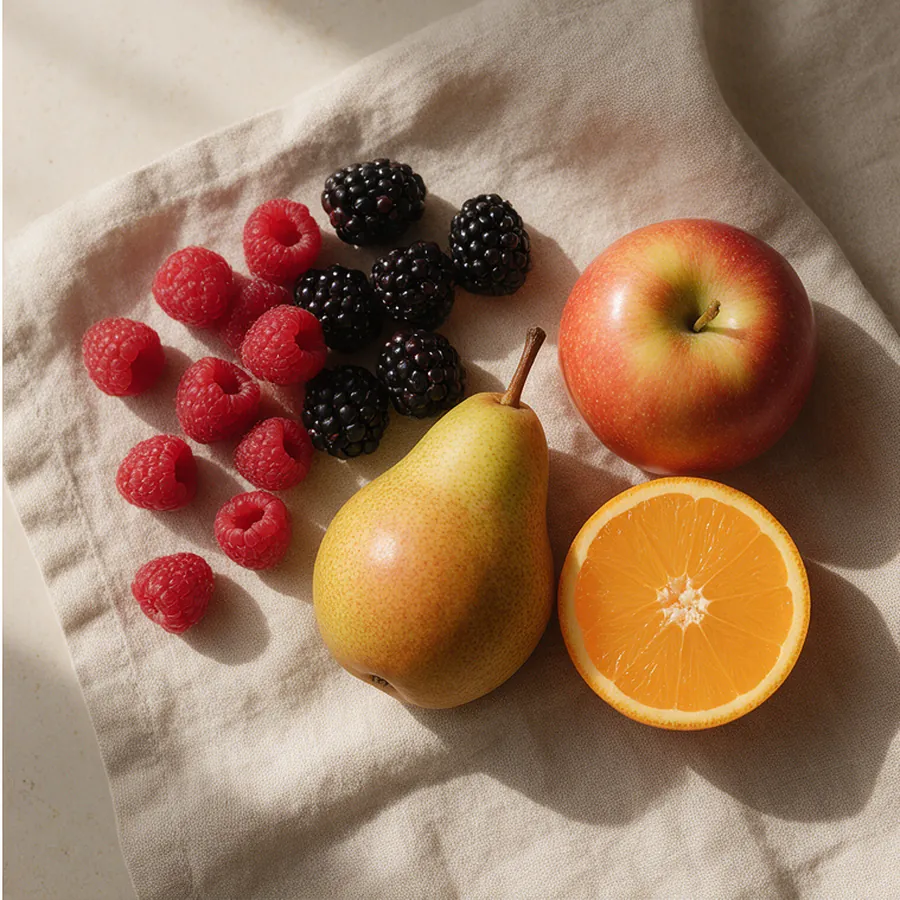
Raspberries
8 gper 1 cupThe highest-fiber common fruit; frozen is cheaper and as good on porridge.
FruitBlackberries
7.5 gper 1 cupFree in hedgerows in late summer.
FruitBlueberries
3.5 gper 1 cupfresh or frozen
FruitPear, with skin
5.5 gper 1 mediumMost of the fiber is in and just under the skin.
Pears are high in sorbitol, which some people find gassy.
FruitApple, with skin
4.5 gper 1 mediumSkin on. Peeled, it drops to about 2 g.
 Fruit
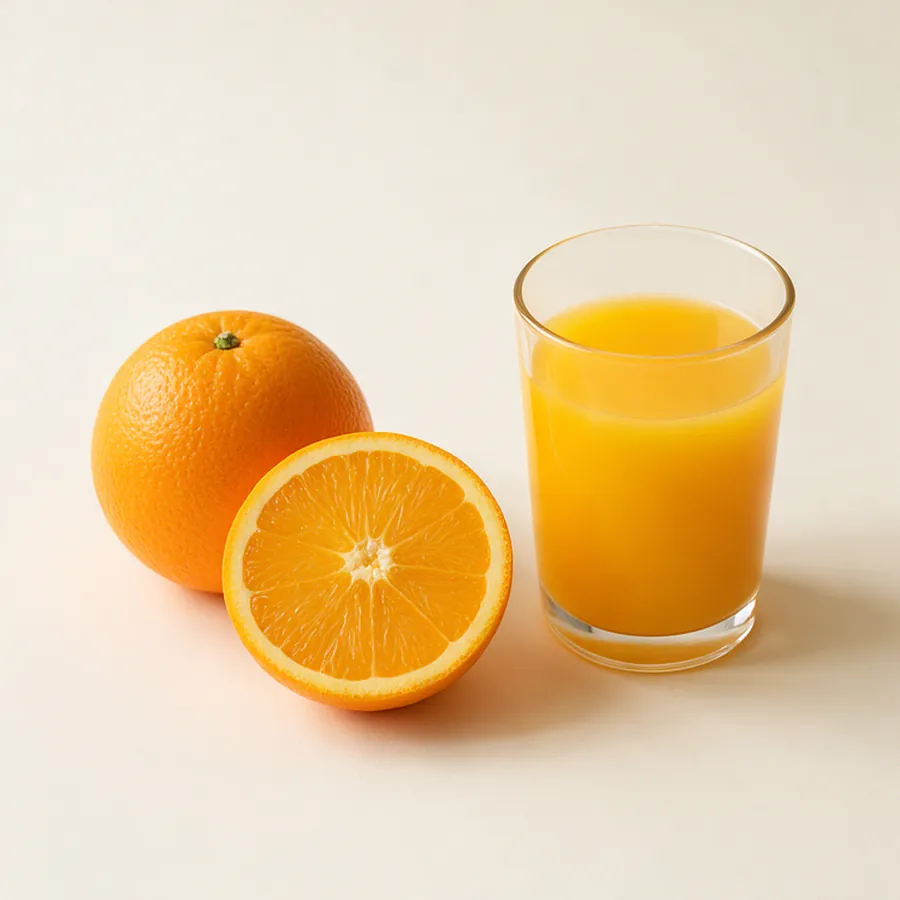
Orange
3 gper 1 mediumEat the segments with the pith; the juice keeps almost none of it.
FruitOrange juice
0.5 gper 1 glassIncluded for comparison with the whole fruit.
FruitBanana
3 gper 1 mediumGreener bananas carry more resistant starch, which some people find easier than ripe ones and some find harder.
FruitKiwi fruit
2 gper 1 fruitTwo a day was the dose in the constipation trials; the skin is edible on the gold varieties.
FruitAvocado
6.5 gper halfOn rye, 8 g before nine in the morning.
FruitPrunes
3.5 gper 5 prunesFiber plus sorbitol, which is why they have the reputation they have; start with three.
VegetablesBroccoli, cooked
5 gper 1 cupSteam five minutes; the stalk, peeled and sliced, is as good as the florets.
A fermentable vegetable; some people notice more gas from larger portions.
VegetablesCarrots, raw
3.5 gper 1 cup, choppedWith hummus, the easiest 5 g snack there is.
VegetablesSweet potato, baked with skin
4 gper 1 mediumSkin on; the skin is where it is.
VegetablesPotato, baked with skin
4 gper 1 mediumCooled and reheated potato carries more resistant starch.
VegetablesBrussels sprouts, cooked
4 gper 1 cupRoast at 220 C with oil until the edges brown.
Among the more fermentable vegetables.
VegetablesSpinach, cooked
4.5 gper 1 cupA cup cooked is about 300 g raw; wilt it into dal or pasta.
VegetablesSweetcorn, cooked
4.5 gper 1 cupboiled from frozen or canned
VegetablesCabbage, cooked
3 gper 1 cupThe cheapest vegetable in the north; shredded and fried with caraway.
 Nuts and seeds
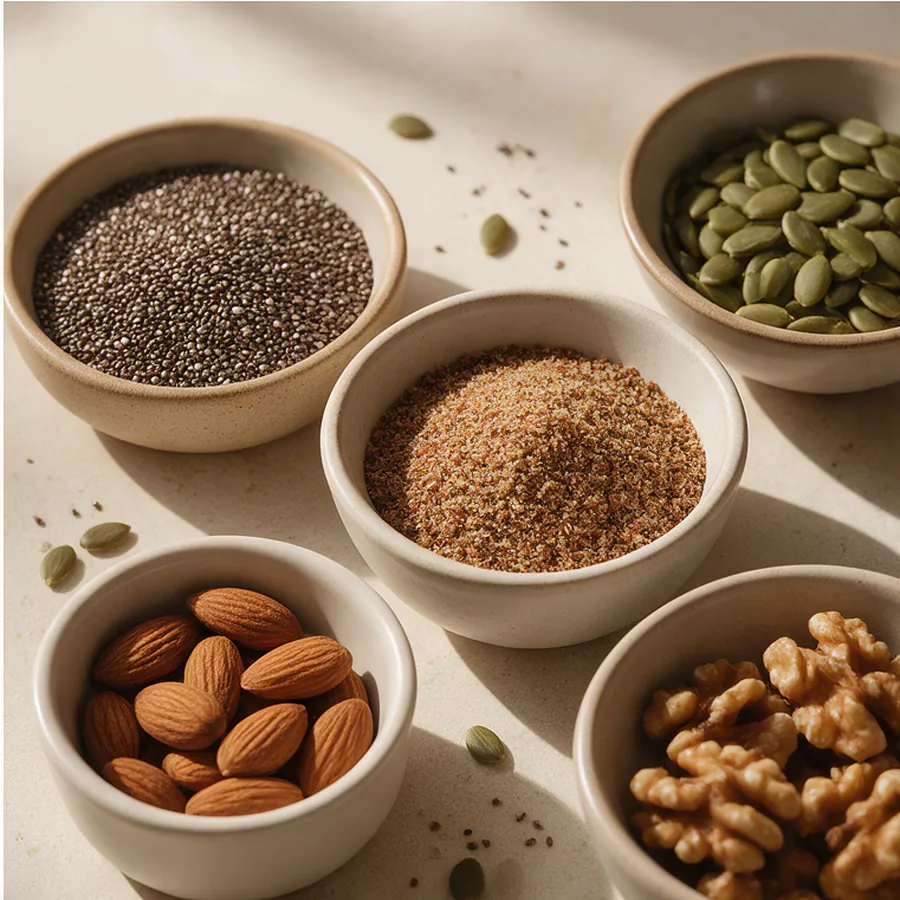
Chia seeds
9.5 gper 2 tablespoonsSoak in plant milk for a pudding, or stir into porridge; always with liquid.
A lot of fiber in a small spoon; one tablespoon is a sensible start.
Nuts and seedsGround flaxseed
4 gper 2 tablespoonsGround, not whole; whole seeds pass through. Keep it in the fridge.
Nuts and seedsPumpkin seeds
2 gper 30 gToast in a dry pan for two minutes.
Nuts and seedsAlmonds
3.5 gper 30 g, about 23 nutsraw, with skin
Nuts and seedsWalnuts
2 gper 30 graw
 Nuts and seeds
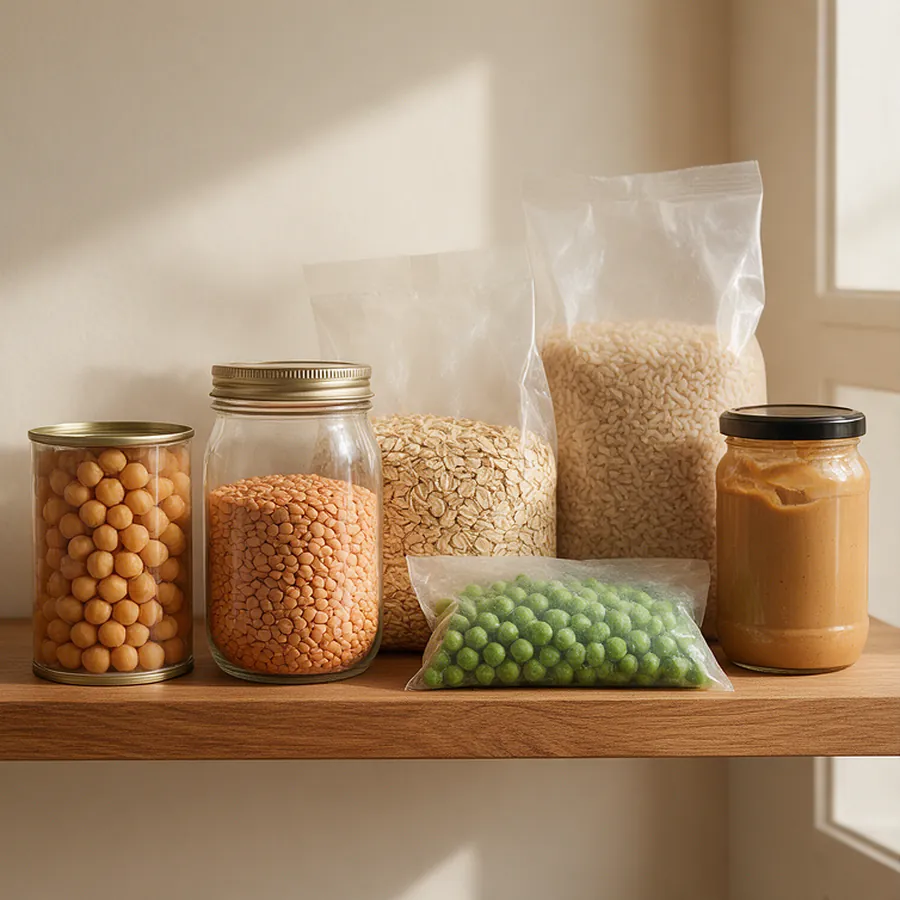
Peanut butter
1.5 gper 2 tablespoonsOn wholegrain toast with a sliced banana: about 6 g.
Nuts and seedsSunflower seeds
2.5 gper 30 gdry, hulled
OtherDark chocolate, 70 to 85 percent
3 gper 30 gYes, it counts.
No food matches that combination. Loosen one filter.
Side by side
Serving sizes differ by food, so the fourth column shows fiber per 100 g as a like-for-like figure. The higher number is not automatically the better choice for you; tolerance, cost and whether you will actually eat it matter as much.
| Food | Serving | Fiber per serving | Per 100 g | Form | Note |
|---|
Source: USDA FoodData Central, SR Legacy and Foundation Foods, dietary fiber per serving, rounded to the nearest 0.5 g.
Values: USDA FoodData Central, dietary fiber per serving, rounded to 0.5 g; the form (cooked, canned and drained, raw, dry) is stated on each card because it changes the number. Next: add a day of these to the checker, or read the full chart with the recipes.
This is general information about food and training, not medical advice. If you have a diagnosed condition or take medication, talk to your doctor before changing your diet or exercise.
Evidence pack: fiber-30g-v1. Food values: USDA FoodData Central. Written by Barbara.